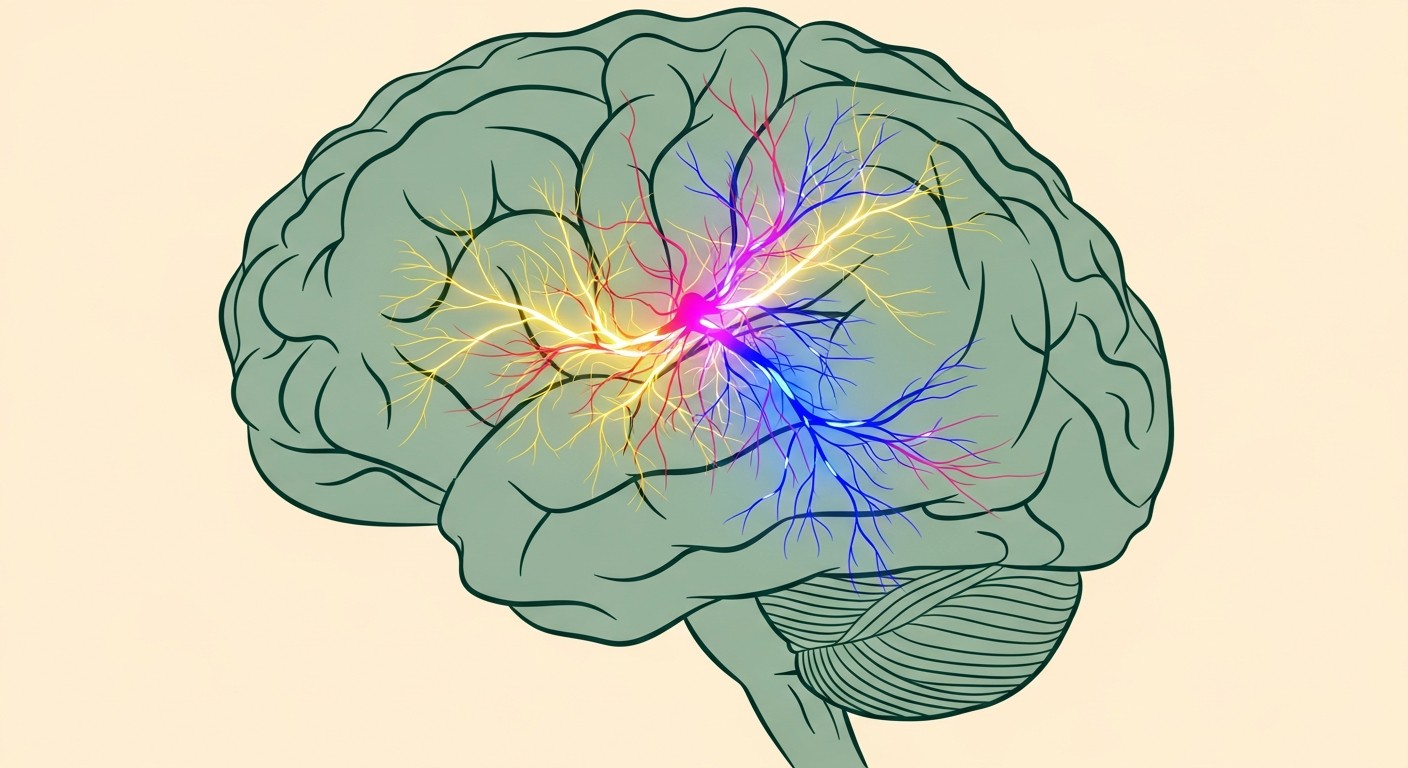
Menopause isn't just hot flashes and mood swings — it's a profound neurochemical transformation. Here's what's really happening inside your brain.
When we talk about menopause, the conversation often centers around hot flashes, weight gain, and mood swings. But beneath the surface, something far more intricate is unfolding: your brain chemistry is undergoing a fundamental transformation. Understanding these changes isn't just fascinating — it's essential for anyone who wants to protect their cognitive health, emotional well-being, and long-term brain function.
Let's explore three of the most compelling neurochemical shifts that occur during menopause — and what they mean for you.
Estrogen is far more than a reproductive hormone. It's one of the most powerful modulators of serotonin — your brain's primary "feel-good" neurotransmitter. Estrogen stimulates the production of serotonin, enhances the sensitivity of serotonin receptors, and even inhibits the enzymes that break serotonin down.
During perimenopause and menopause, as estrogen levels fluctuate wildly and eventually decline, the serotonin system takes a direct hit. This is why so many women experience:
Research published in The Journal of Clinical Endocrinology & Metabolism has shown that women going through menopause have significantly lower serotonin transporter availability compared to premenopausal women. This isn't "just stress" or "getting older" — it's a measurable neurochemical shift.
What you can do: Hormone replacement therapy (HRT) that includes estradiol has been shown to help restore serotonin function. Additionally, regular exercise, adequate protein intake (tryptophan is the amino acid precursor to serotonin), and targeted supplementation can support this pathway.
If you've ever walked into a room and forgotten why you're there, or struggled to find a word that was "right on the tip of your tongue," you've experienced what many women describe as menopause-related brain fog. The neuroscience behind this is fascinating.
Estrogen plays a critical role in the cholinergic system — the network of neurons that uses acetylcholine as their primary neurotransmitter. Acetylcholine is essential for:
When estrogen declines, the production and release of acetylcholine decreases. A landmark study by Dr. Lisa Mosconi at Weill Cornell Medicine used PET scans to show that women's brains actually undergo a metabolic shift during menopause — the brain's ability to use glucose as fuel decreases by up to 20-30% in certain regions, particularly the hippocampus and prefrontal cortex.
This metabolic shift is directly tied to declining estrogen's effect on the cholinergic system. The good news? For many women, this "fog" is temporary. The brain can adapt, finding alternative metabolic pathways — but supporting it through the transition makes a meaningful difference.
What you can do: Consider early intervention with HRT if appropriate for your risk profile. Omega-3 fatty acids, particularly DHA, support cholinergic function. Cognitive exercises and novel learning experiences stimulate acetylcholine release and help maintain neural plasticity.
GABA (gamma-aminobutyric acid) is your brain's primary calming neurotransmitter. Think of it as the neurochemical equivalent of a warm bath — it quiets neural activity, promotes relaxation, and helps you fall and stay asleep. Estrogen and progesterone both enhance GABA receptor sensitivity.
During menopause, the decline of both hormones creates a "double hit" to the GABA system:
The result? Many women report a persistent sense of internal "buzzing" or restlessness, difficulty winding down at night, heightened startle responses, and a general feeling that their nervous system is "stuck in overdrive."
A 2021 study in Neurobiology of Aging confirmed that postmenopausal women have significantly altered GABAergic tone compared to premenopausal women, with particular impact in the amygdala and prefrontal cortex — regions governing emotional regulation and executive function.
What you can do: Progesterone replacement (particularly micronized oral progesterone taken at bedtime) can restore allopregnanolone levels and dramatically improve sleep quality. Magnesium glycinate and L-theanine are evidence-backed supplements that support GABA activity. Breathwork and meditation practices have also been shown to upregulate GABA receptor expression.
Menopause is not a disease — it's a natural transition. But understanding the neurochemistry behind it empowers you to make informed decisions about your health. These aren't imaginary symptoms. They're real, measurable, and most importantly, treatable.
If you're experiencing brain fog, mood changes, or sleep disruptions during perimenopause or menopause, know that there are science-backed strategies to help your brain not just survive this transition, but thrive through it.
Event invites, new articles, and the occasional note from Danielle. No spam — unsubscribe anytime.