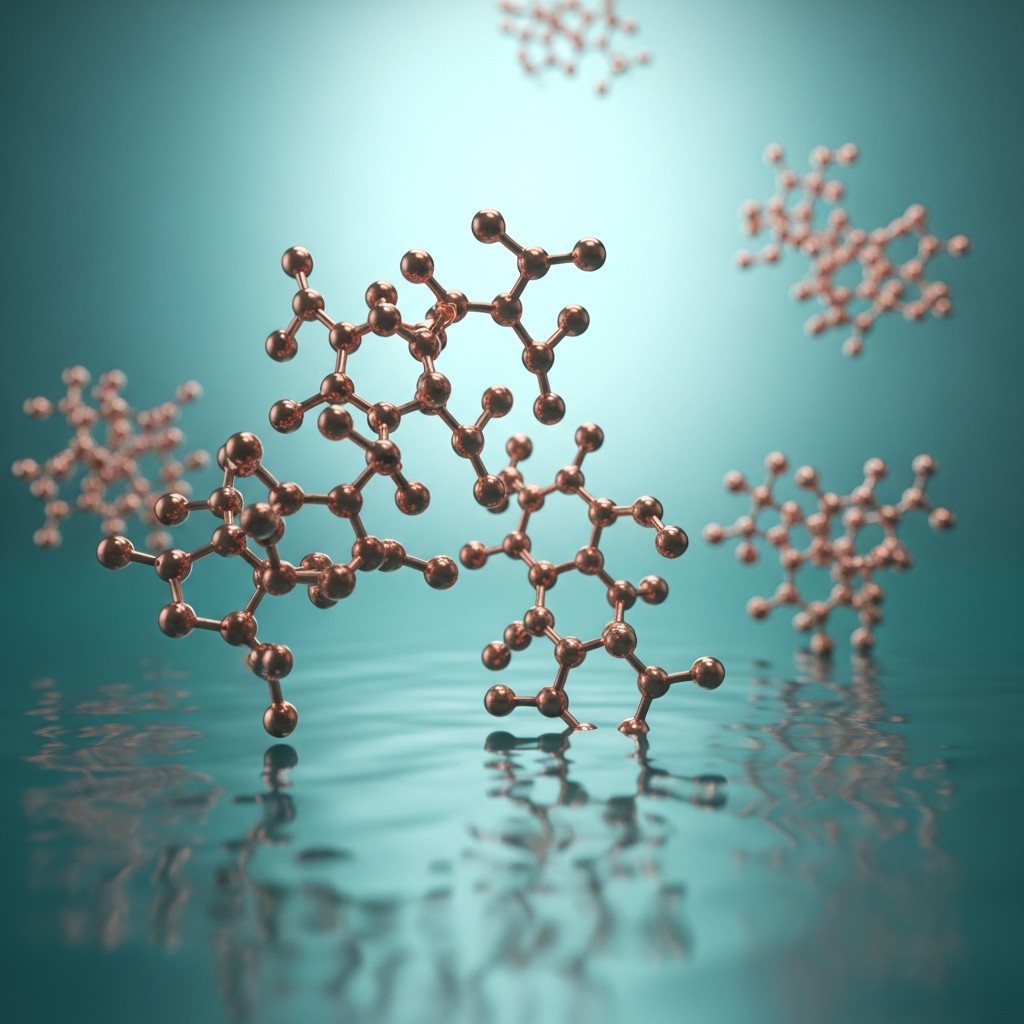
GHK-Cu is one of the most studied peptides in regenerative medicine — and your body's levels drop by 60% after age 60. Here's what the research says about this remarkable molecule.
In the world of peptide therapy, few molecules have a research pedigree as impressive as GHK-Cu (glycyl-L-histidyl-L-lysine copper complex). Discovered in 1973 by Dr. Loren Pickart, this naturally occurring tripeptide has been the subject of over 4,000 studies — and the findings are nothing short of remarkable.
GHK-Cu isn't a synthetic drug. It's a molecule your body already produces. The problem? Plasma levels of GHK-Cu decline by approximately 60% between the ages of 20 and 60. This decline correlates closely with the visible and invisible signs of aging — from skin laxity and thinning hair to impaired wound healing and increased inflammation.
GHK-Cu is often called a "master regulator" because of its ability to influence gene expression at a fundamental level. Research has identified over 4,000 genes that are modulated by GHK-Cu — roughly 6% of the human genome. Its mechanisms of action include:
Most people first encounter GHK-Cu in skincare products, and for good reason. A landmark study published in the Journal of Cosmetic Dermatology found that GHK-Cu cream applied twice daily for 12 weeks produced:
But here's what most skincare brands won't tell you: topical application only reaches the epidermis and superficial dermis. For systemic benefits — tissue repair, joint health, organ protection, systemic inflammation reduction — subcutaneous injection or transdermal delivery allows GHK-Cu to reach tissues that topicals simply cannot.
Joint and connective tissue health: GHK-Cu stimulates glycosaminoglycan synthesis — the molecules that keep cartilage hydrated and resilient. For patients with osteoarthritis or joint degradation, this is significant. Animal studies have demonstrated reduced cartilage breakdown and improved joint function with GHK-Cu treatment.
Lung tissue repair: A fascinating area of research shows GHK-Cu can remodel damaged lung tissue by suppressing fibrotic gene expression and promoting healthy tissue architecture. Studies published in Genome Medicine identified GHK as a compound capable of reversing gene expression signatures associated with COPD and emphysema.
Neuroprotection: GHK-Cu has demonstrated the ability to reduce oxidative damage in neural tissue, lower neuroinflammation, and support brain-derived neurotrophic factor (BDNF) signaling — a key pathway for neuroplasticity and cognitive function.
DNA repair: Perhaps most intriguing, research has shown that GHK-Cu upregulates genes involved in DNA damage repair while suppressing genes associated with metastasis and cancer progression. A 2014 study in BioMed Research International found that GHK could reset the gene expression of diseased cells closer to a healthy state.
At Sparq Health, GHK-Cu is part of our peptide therapy toolkit. Common protocols include:
GHK-Cu is one of the most well-researched peptides in existence, with a safety profile that reflects decades of study. It's not a miracle cure — it's a molecule your body was designed to use, and one that declines precisely when you need it most. Restoring optimal levels is a logical, evidence-based strategy for anyone serious about aging well.
If you're curious whether GHK-Cu belongs in your wellness protocol, we're here to walk you through the science and the strategy.
Event invites, new articles, and the occasional note from Danielle. No spam — unsubscribe anytime.